How Climate Change Is Affecting Water in Bastrop & Lee Counties
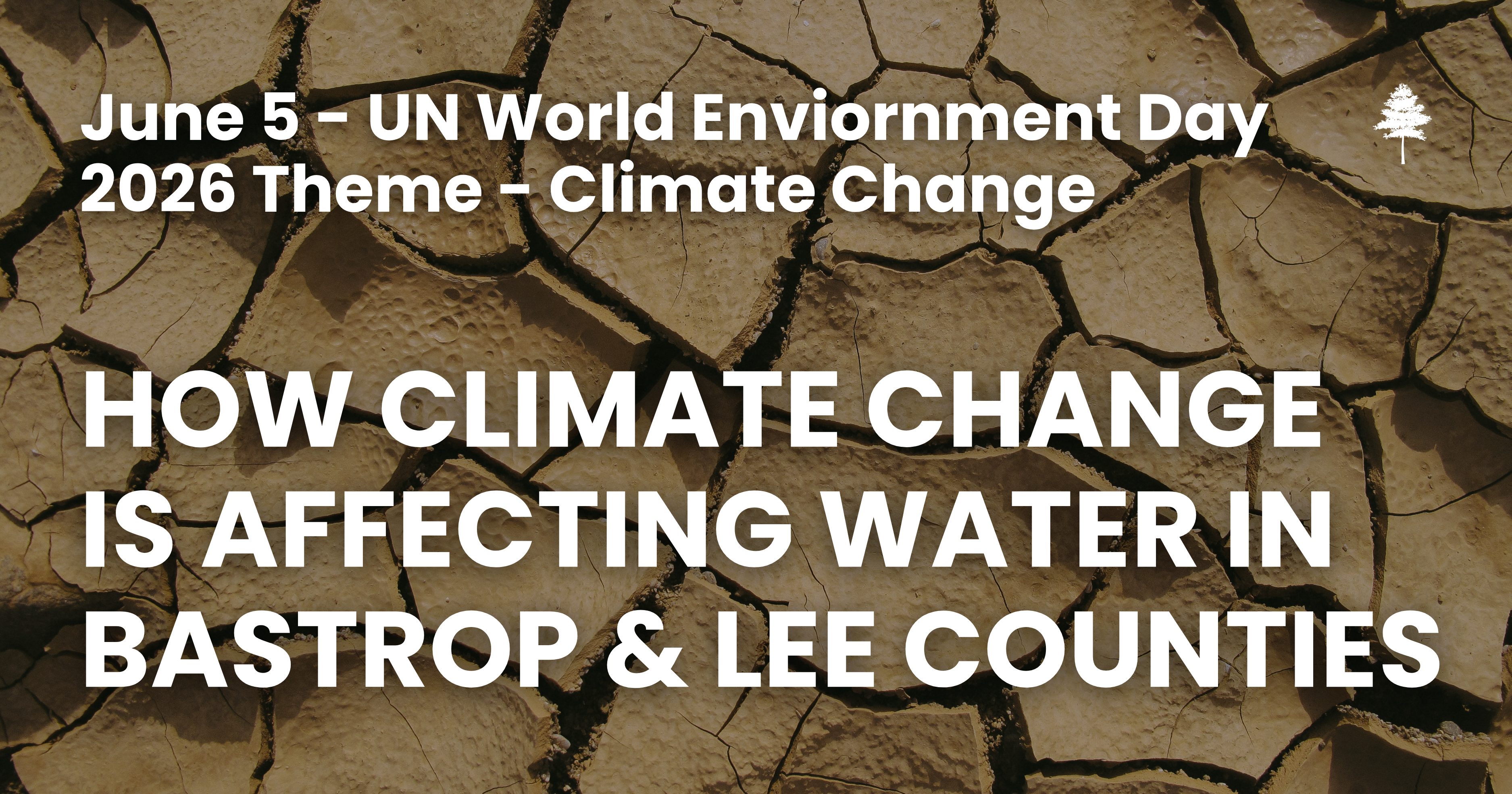
June 5 is World Environment Day, a global event led by the United Nations to encourage awareness and action for environmental issues. This year’s theme focuses on climate change and the growing impacts changing weather patterns are having on communities and natural resources around the world, including right here in Bastrop and Lee Counties.
While our region may still receive a similar average amount of rainfall each year, we are increasingly experiencing longer dry periods followed by short, intense rainfall events and stronger storms. These changing weather patterns create challenges for both our communities and our groundwater resources. When soil goes long periods without rain, it can become dry, compacted, and hardened. Once heavy rainfall finally arrives, the ground often struggles to absorb the water effectively.
Instead of soaking into the soil and replenishing groundwater supplies, much of the water quickly runs off the surface. This can lead to localized flooding, increased soil erosion, and pollutants washing into nearby creeks, rivers, and lakes. At the same time, less water infiltrates into the ground, meaning less groundwater recharge for the aquifers that support our homes, farms, businesses, and communities.
Groundwater is especially important in Bastrop and Lee Counties because 100 percent of our municipal water supply comes from groundwater resources. Helping water soak into the ground and reducing unnecessary water waste are important ways we can strengthen our community’s resilience to changing weather conditions.
Fortunately, small actions can make a meaningful difference. Planting native and drought-resistant vegetation, using mulch in garden beds, harvesting rainwater, improving soil health, and conserving water indoors and outdoors can all help increase infiltration, reduce runoff, and support groundwater recharge.
Protecting our water resources starts at the local level. Every drop that soaks into the ground today helps support the long-term sustainability of our aquifers for future generations.