Celebrating International Women’s Day By Highlighting The Incredible Women Making Waves In Water
On March 8 we celebrate International Women’s Day by highlighting the incredible women making waves in water. The women featured below have helped shape how we understand, manage, and value water, from space to international policy to rural Texas communities. And at Lost Pines Groundwater Conservation District, we are proud to work alongside strong, knowledgeable, and dedicated women who help steward our aquifers for generations to come.
Dr. Kathryn D. Sullivan
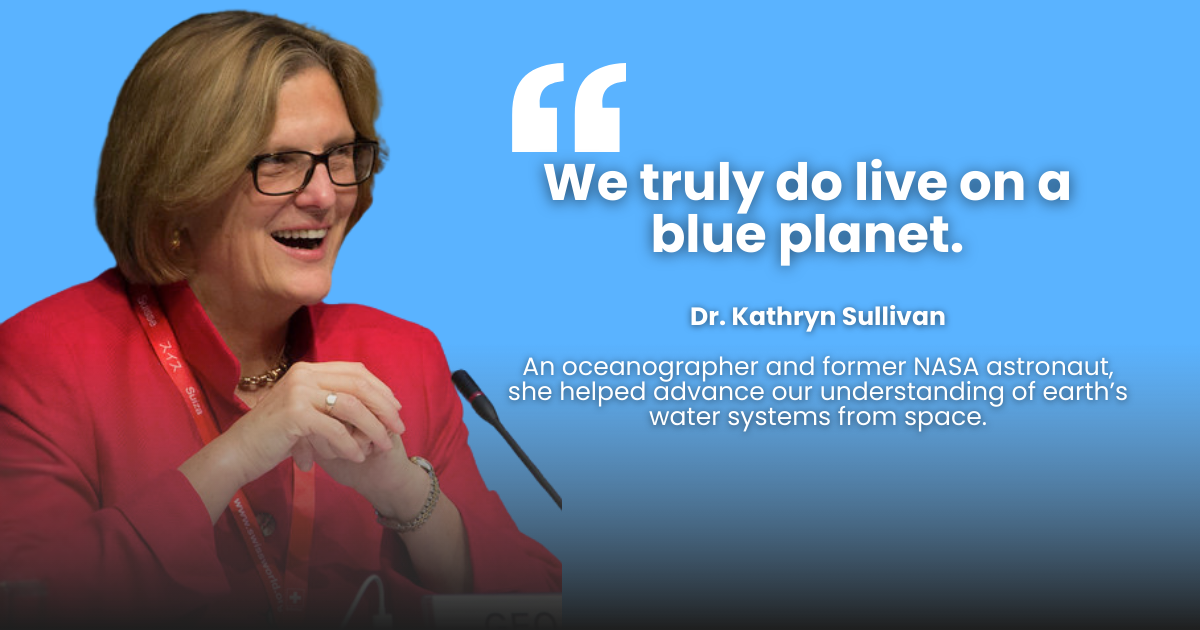
Dr. Kathryn D. Sullivan is an oceanographer, geologist, and former NASA astronaut whose career reshaped how we view our planet’s water systems. In 1984, she became the first American woman to walk in space. From orbit, she saw what few humans ever will: the interconnected blue systems of oceans, clouds, rivers, and ice that define our planet.
Her work has helped scientists better understand how Earth’s water cycles operate at a global scale including how oceans influence climate, how atmospheric patterns affect precipitation, and how changes in one region ripple across the globe. She later served as Administrator of NOAA, further strengthening the link between scientific research and public policy.
When we talk about groundwater in Bastrop and Lee Counties, we are discussing a local piece of a much larger system. Dr. Sullivan’s career reminds us that every aquifer, every rainfall event, and every conservation effort is part of a global water story.
We truly do live on a blue planet and understanding that perspective helps us protect what lies beneath our feet.
Pati Jacobs
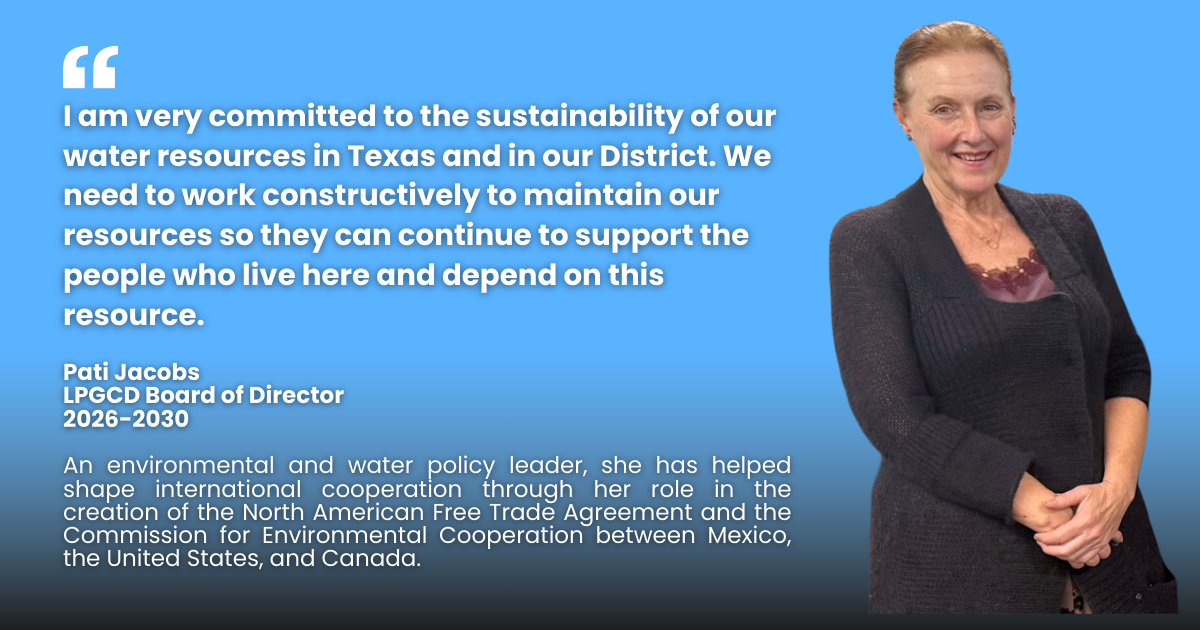
Pati Jacobs brings decades of experience in environmental and water policy leadership. Her work has extended beyond Texas, contributing to international cooperation efforts related to the creation of the North American Free Trade Agreement and the Commission for Environmental Cooperation between Mexico, the United States, and Canada.
Water policy is rarely simple. It requires balancing economic development, environmental protection, and the needs of communities. Leaders like Pati understand that sustainable water management depends on collaboration — across counties, states, and even national borders.
Her commitment is rooted in long-term thinking and practical stewardship.
“I am very committed to the sustainability of our water resources in Texas and in our District. We need to work constructively to maintain our resources so they can continue to support the people who live here and depend on this resource.”
At LPGCD, that mindset translates into thoughtful groundwater planning, science-based management, and responsible oversight. Strong policy leadership helps protect our aquifers not just for today’s residents, but for the families and businesses that will rely on them decades from now.
Dr. Sandra Postel
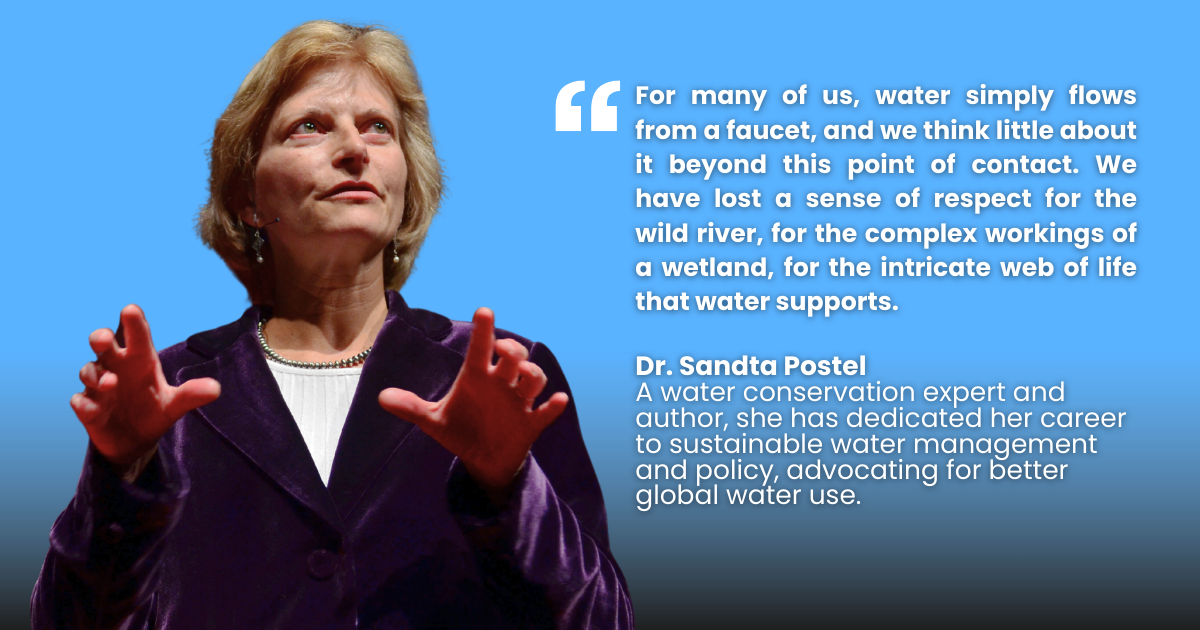
Dr. Sandra Postel is one of the world’s leading voices on sustainable water use. As a water policy expert and author, she has dedicated her career to examining how societies allocate and protect freshwater resources.
Her work emphasizes that water is more than a commodity, it is a life-support system. Rivers sustain fisheries and agriculture. Wetlands filter pollutants and recharge aquifers. Healthy watersheds support biodiversity and economic vitality alike.
“For many of us, water simply flows from a faucet, and we think little about it beyond this point of contact. We have lost a sense of respect for the wild river, for the complex workings of a wetland, for the intricate web of life that water supports.”
Dr. Postel’s perspective challenges us to reconnect with the full water cycle. In our District, that means understanding how surface water, groundwater, recharge, pumping, and conservation practices all interact. When we see water as part of an intricate web of life, we approach management decisions with greater care and responsibility.
Maude Barlow
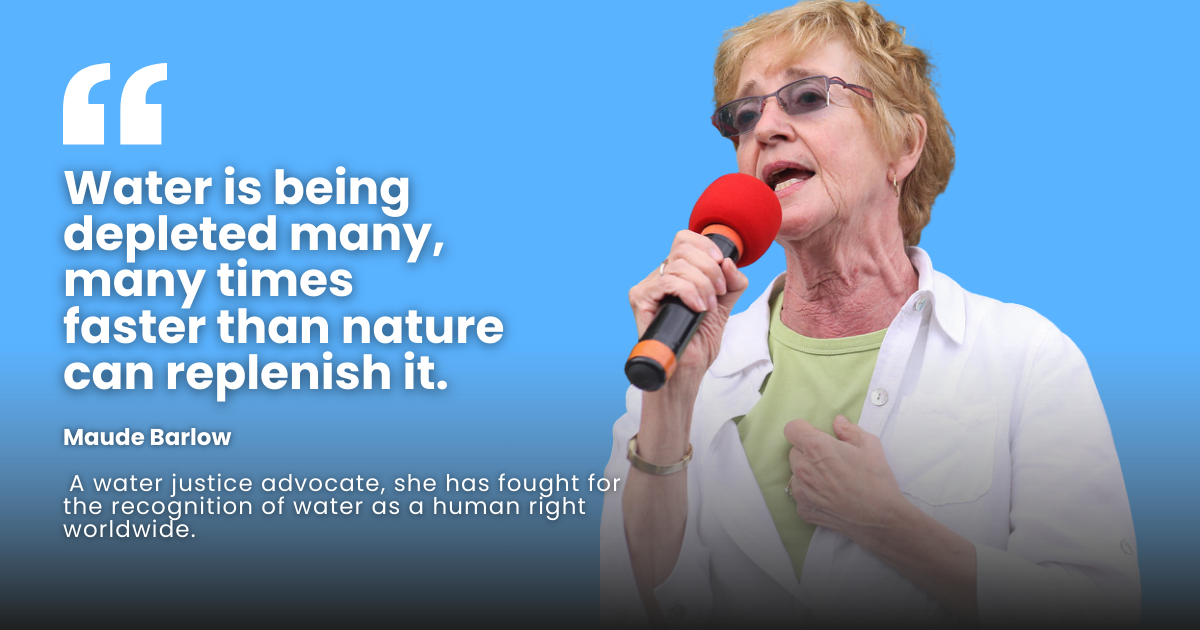
Maude Barlow is a global water justice advocate who has worked tirelessly to advance recognition of water as a human right. Her advocacy highlights a fundamental truth: access to clean, safe water is essential for health, dignity, and economic stability.
Around the world, communities face declining supplies, contamination, and inequitable access. Barlow has consistently called attention to the urgency of protecting water resources from overuse and mismanagement.
“Water is being depleted many, many times faster than nature can replenish it.”
Her warning is especially relevant in regions that depend heavily on groundwater. In Bastrop and Lee Counties, where our municipal supply comes entirely from groundwater, stewardship is not abstract. It is personal. It affects rural households, agricultural producers, and growing communities alike.
Protecting groundwater is both a local responsibility and part of a broader global movement toward building a secure water future.
Sheril Smith
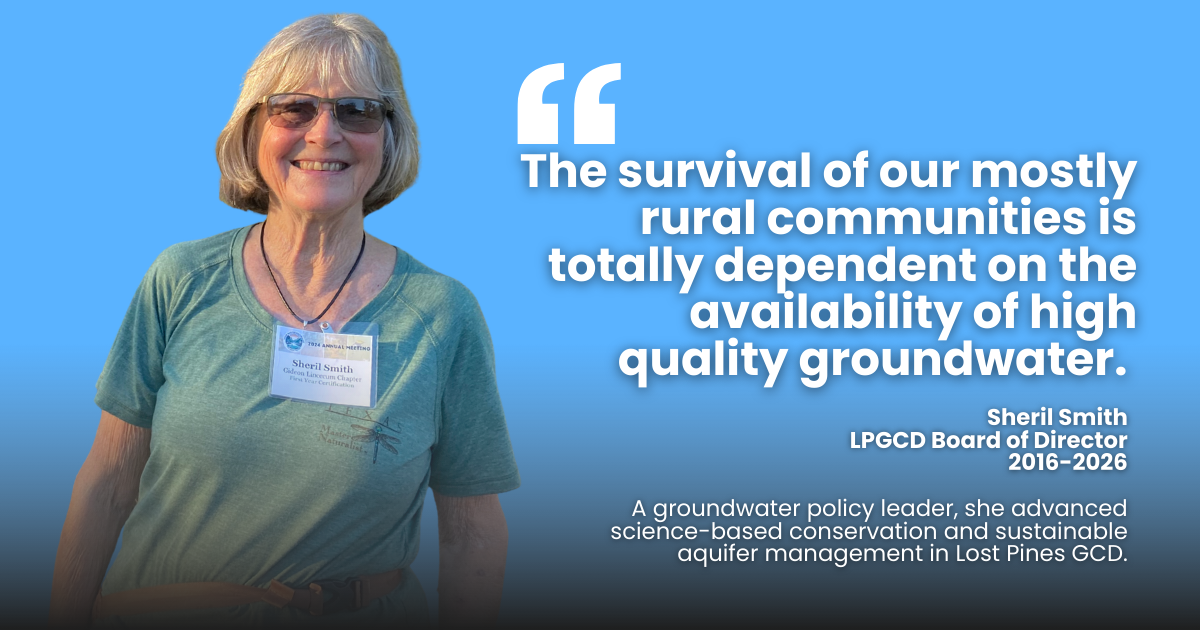
Sheril Smith has served as a steady and knowledgeable voice on groundwater policy within Lost Pines GCD for the past decade. She consistently advocated for data-driven decision-making and responsible aquifer management.
Groundwater management in a predominantly rural district carries unique challenges. Many residents rely on private wells. Agricultural operations depend on reliable supply. Economic development must be balanced with long-term sustainability.
Sheril has emphasized the importance of maintaining high-quality groundwater and protecting water levels for future generations.
“The survival of our mostly rural communities is totally dependent on the availability of high quality groundwater.”
Her leadership reflects the reality that water management and planning affects livelihoods, property values, and the character of our communities.
The Lost Pines Groundwater Conservation District would like to thank Sheril Smith for her service to the Bastrop and Lee Counties as Board Director from 2016 to 2026 and Board President from September 2021 to December 2022.
Honoring Women in Water
From astronauts viewing Earth from orbit to policy leaders shaping agreements, from global advocates to local board members, women continue to influence how water is understood, valued, and protected.
Here in Bastrop and Lee Counties, we are grateful for the women who contribute their expertise, leadership, and dedication to groundwater conservation every day.
Here’s to the women, past, present, and future, who help conserve and protect our water.